




ルーブリックなし
カタツムリAchatinaFulicaの粘液は、人間の軟骨細胞にプラスの効果があります
01
7月
7月
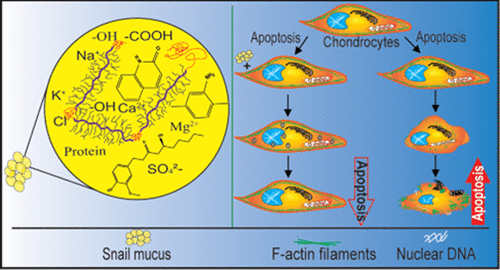
この研究は、インビトロでの変形性関節症および軟骨組織修復における潜在的な治療的修復剤としてのAchatina fulica粘液の新規使用を報告します。. カタツムリの粘液が分離されました, 滅菌済み, FTIRを使用して特性評価, XPS, レオロジー, およびLC-MS/MS. GAG, 砂糖, フェノール, タンパク質含有量は標準アッセイを使用して推定されました. LC-MS/MS により、6-ジンゲロールとその他のいくつかの小分子が同定されました. C28/I2 細胞を in vitro アッセイのモデルとして使用し、滅菌した粘液のヒト軟骨細胞に対する影響を研究しました。. MTT アッセイは、A のペダルから粘液が抽出されたことを示しています。. フリカは、次の濃度まで細胞と生体適合性があります。 50 μg/mL. 粘液は細胞の移動と増殖を促進し、内部の傷を完全に閉じました。 72 h, インビトロスクラッチアッセイで示されているように. 加えて, カタツムリの粘液はアポトーシスを大幅に減少させた (p < 0.05) 処理された細胞内で 74.6%. C28/I2 細胞の細胞骨格の完全性が保存されました, 主に粘液中のGAGと6-ジンゲロール含有量に起因すると考えられます. 結論は, この研究は、GAG と 6-ジンゲロールが、A 細胞からの粘液分泌に創傷治癒と抗アポトーシス特性を与えたことを示唆しています。. fulica を使用し、治療的修復や軟骨組織工学の研究が可能.
ビクターA. そしてアショクM. ライチュール